
Okay, so check this out—I’ve been poking around Solana wallets for years. Whoa! Seriously, the Phantom browser extension keeps coming up as the one people actually use. My instinct said it would be clunky at first. Initially I thought it was just another shiny extension, but then I watched how smooth it felt moving tokens and interacting with DeFi apps, and that changed my mind. Actually, wait—let me rephrase that: it started as curiosity, then turned into a daily tool for small trades and NFT drops, and finally it became my go-to for testing integrations when I was building stuff locally.
Short version: Phantom nails UX. Long version: the extension balances simplicity with powerful features, so you can move between wallets, sign transactions, and connect to dApps without wrestling with weird menus. Hmm… that ease is handy when you’re on a deadline. On one hand it’s approachable for beginners; on the other hand there are enough advanced settings for power users (network switching, custom RPCs, hardware wallet support). On the downside, I still see folks click the wrong approve button. That bugs me. Be careful.
How I install and vet a wallet extension (and why you should too)
Whoa! First rule: only get extensions from trusted sources. My checklist is simple. Check the official site or a verified listing in the Chrome Web Store or Firefox Add-ons. Read recent reviews. Look at update cadence. If somethin’ smells off—stop. Seriously, trust your gut.
Here’s a practical step I take. I backup the seed phrase to an offline device right away. Then I create a small “working” account with minimal funds for experimentation. If I need to interact with a new dApp I use that account first. That way, if something weird happens, the damage is limited.
For convenience you can grab the extension via the official route: phantom wallet download extension. But again—double-check the URL and certificate. Browsers will warn you on shady installs. My rule: never paste your seed phrase into a website form or a chat. Ever.
On a technical note, Phantom supports Solana, Serum, Raydium, Orca, all the usual suspects. It also adds token management, staking, and built-in swap features. Those swaps are fast because Solana is fast, though slippage and liquidity still matter.
Something else I like: hardware wallet support. Pairing a Ledger for high-value holdings adds another security layer. It’s not bulletproof, but it’s a big improvement over keeping everything in a hot extension.
Daily workflows — how I actually use Phantom
I use the extension in three main ways. First, as a simple wallet for holding SOL and SPL tokens. Second, as a gateway to DeFi dApps. Third, as an NFT mint and marketplace connector. The flow is usually consistent: connect, review the transaction, and confirm on device when needed. If I’m in a rush I still slow down. My brain has learned that haste equals regret in crypto.
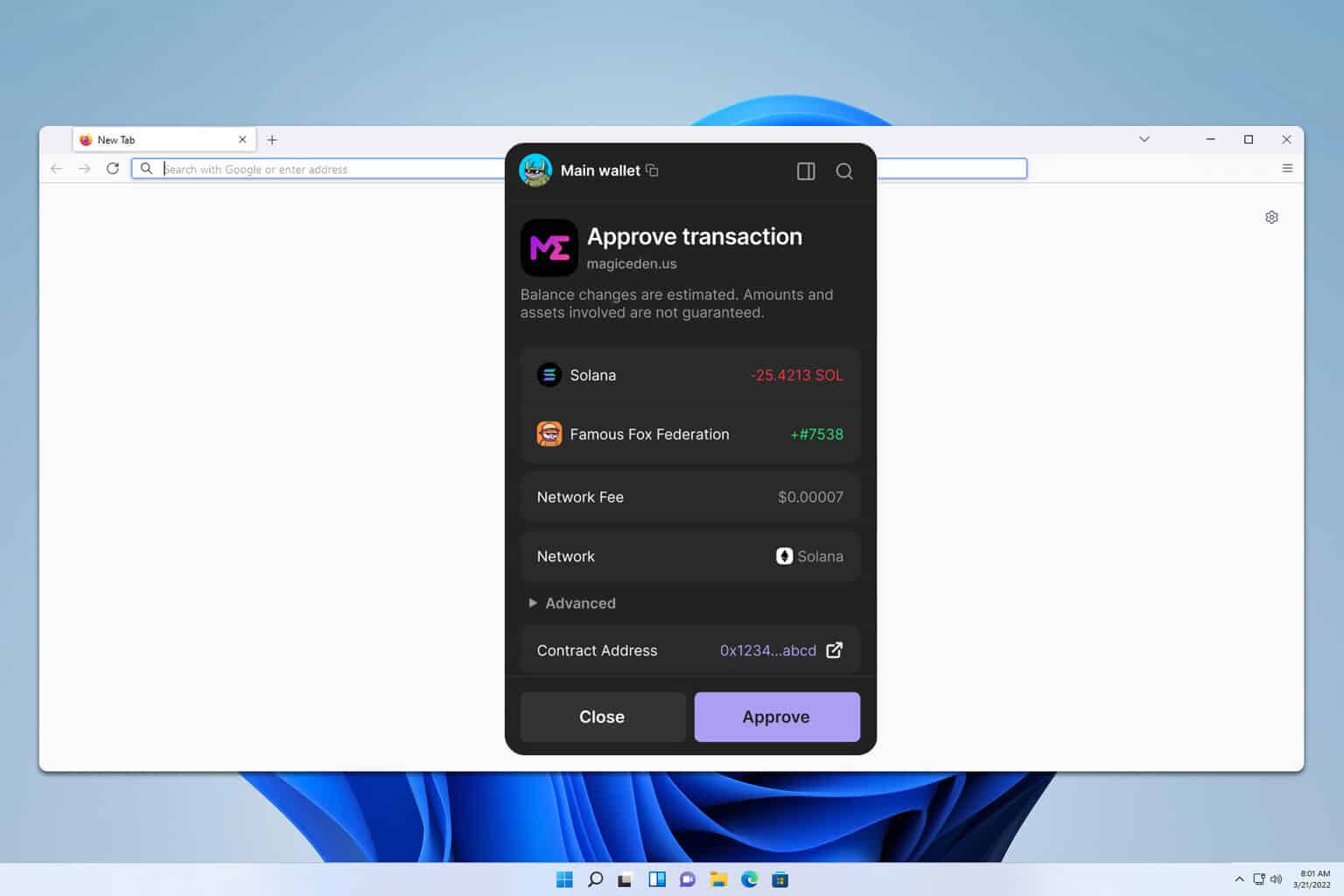
Here’s a common scenario: I’m on a marketplace and want to bid. The dApp sends a connection request. Phantom pops a clear prompt. I check the domain and the transaction details line-by-line. If anything looks weird—unknown program IDs, strange token moves—I cancel. This routine has prevented me from signing garbage more than once (yes, I was almost fooled that one time, and I learned fast).
There’s also the mobile angle. The Phantom app syncs to the extension via a secure QR link. It’s neat. Use it when you’re away from your desktop. But if you’re on public Wi‑Fi, be extra cautious—it’s easier to be targeted when networks are untrusted. On the road in the U.S., sometimes I tether to my phone instead.
Security tips that actually matter
Short tip: never share your seed phrase. Wow. Really. It cannot be emphasized enough.
Use hardware wallets for large balances. Set a strong password for your extension and keep your browser and OS updated. Avoid browser profiles that mix personal stuff with dev and test accounts. If you run a developer workflow, sandbox and use dedicated profiles for each project—trust me on this.
Phantom’s permission model is decent. It isolates dApp connections so you can revoke access per origin. Go to settings and manage connected sites regularly. On top of that, watch for phishing. If an app asks you to sign a message that looks like a contract approval but includes weird instructions, pause. Ask in a community channel or on the project’s verified social account before proceeding.
Initially I thought two-factor auth would solve everything, but web3 is different—2FA helps for centralized services, not wallet seed-based systems. So think in layers: secure seed storage, hardware wallet for big funds, extension hygiene, and cautious signing habits.
Common questions I get
Is Phantom free and open-source?
Yes, the extension is free to install. Parts of Phantom’s front end are open-source, which helps community review. That said, always verify the repo or release notes from official channels before trusting builds.
Can I use Phantom with Ledger?
Absolutely. Phantom supports Ledger integration so you can approve transactions on-device. It’s a great step up if you hold significant value in your wallet.
What if I lose my seed phrase?
Then recovery is nearly impossible. Seed phrases are the keys. Store them offline—paper, metal plate, safe deposit box, whatever works for you. I’m biased, but a metal backup is worth the small purchase.
Okay, so here’s the practical takeaway. If you want a friendly, well-designed Solana wallet that integrates with most dApps and supports hardware devices, Phantom is one of the best bets right now. That said, no wallet is a silver bullet. On one hand it simplifies signing and connections; though actually, it also makes it easy to click things quickly and maybe too quickly—so your attention matters.
By the way, if you’re testing DeFi flows, set up multiple accounts and fund them with small amounts first. Try out contract interactions in devnet before mainnet. That extra step has saved me from simple, avoidable mistakes more than once. Somethin’ about seeing gas patterns and program IDs in a safe environment clarifies things.
Final thought: wallets are tools, not guarantees. Use Phantom smartly, keep your backups offline, pair with a Ledger if you can, and practice cautious clicking. You’ll sleep better. I’m not 100% sure I covered everything, but this covers the practical bits that usually trip people up.